
THE CONSTRUCTION LOT IN FIGURES
Kilometres of tunnel to be excavated
Length of TBM Wilma and Olga with backup structure
Tunnel boring machines of this construction lot: WILMA and OLGA
Of mechanical excavation in the construction lot 15,2 km
Executive construction consortium: ARGE BBT - Baulos H53 Pfons-Brenner: Porr Bau GmbH, Marti GmbH Österreich, Marti Tunnel AG Schweiz
Contract value: 959 million EUR
CURRENT WORK

• Blasting excavation main western southbound tunnel
• Blasting excavation main eastern southbound tunnel
• excavation main eastern northbound tunnel with TBM Olga
• excavation main western northbound tunnel with TBM Wilma
EXCAVATION DATA
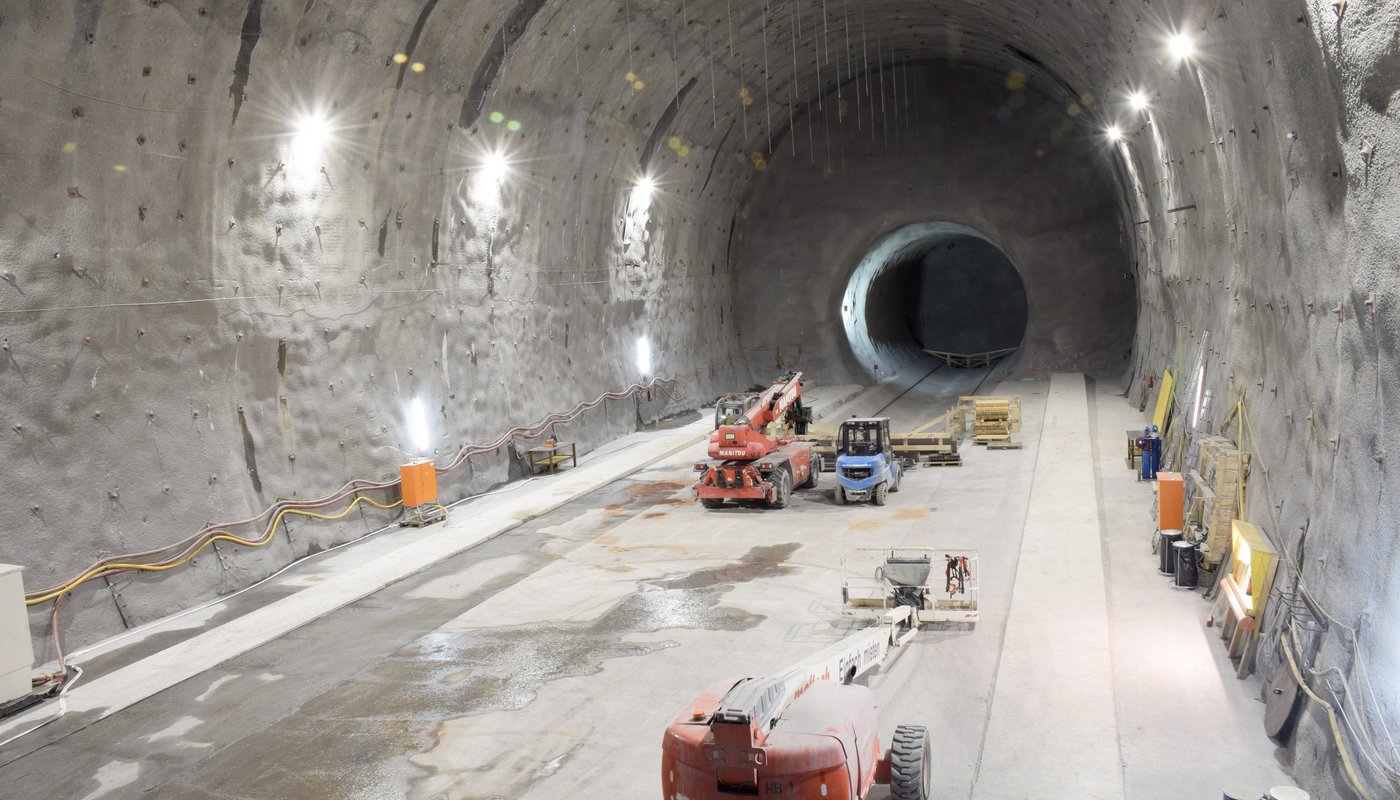
- Excavation 9.888,53 m
- Length 15.128,00 m
- Cross-section 85 m²
- Excavation 7.985,12 m
- Length 9.404,00 m
- Cross-section 80 m²
- Excavation 1.405,10 m
- Length 2.100,00 m
- Cross-section 30 m²
- Excavation 1.615,21 m
- Length 1.615,21 m
- Cross-section 60 m²
The construction lot includes the following excavation works:
- ca. 15.2 km of main tunnel northwards using a TBM
- ca. 10.0 km of main tunnel southwards using the NATM method
- ca. 1.6 km of exploratory tunnel southwards
- ca. 2.6 km of cross passages (37)
The construction lot includes the following inner lining works:
- ca. 15.6 km of exploratory tunnel
- ca. 15.6 km of main east tunnel
- ca. 15.5 km of main west tunnel
- ca. 3.1 km of cross passages (45)
- ca. 5.1 km of auxiliary structures (Wolf access tunnel, spoil tunnel, etc.)

EXCAVATION METHODS
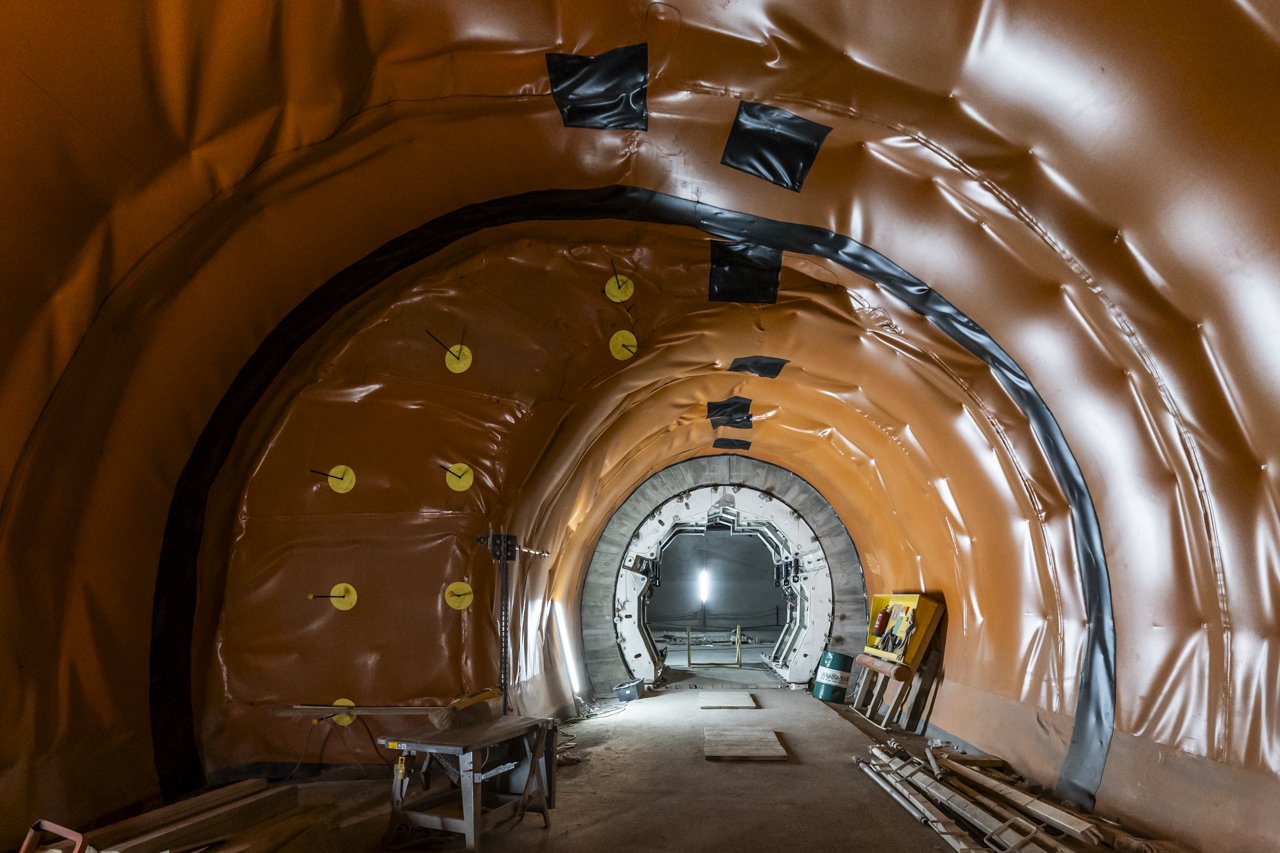
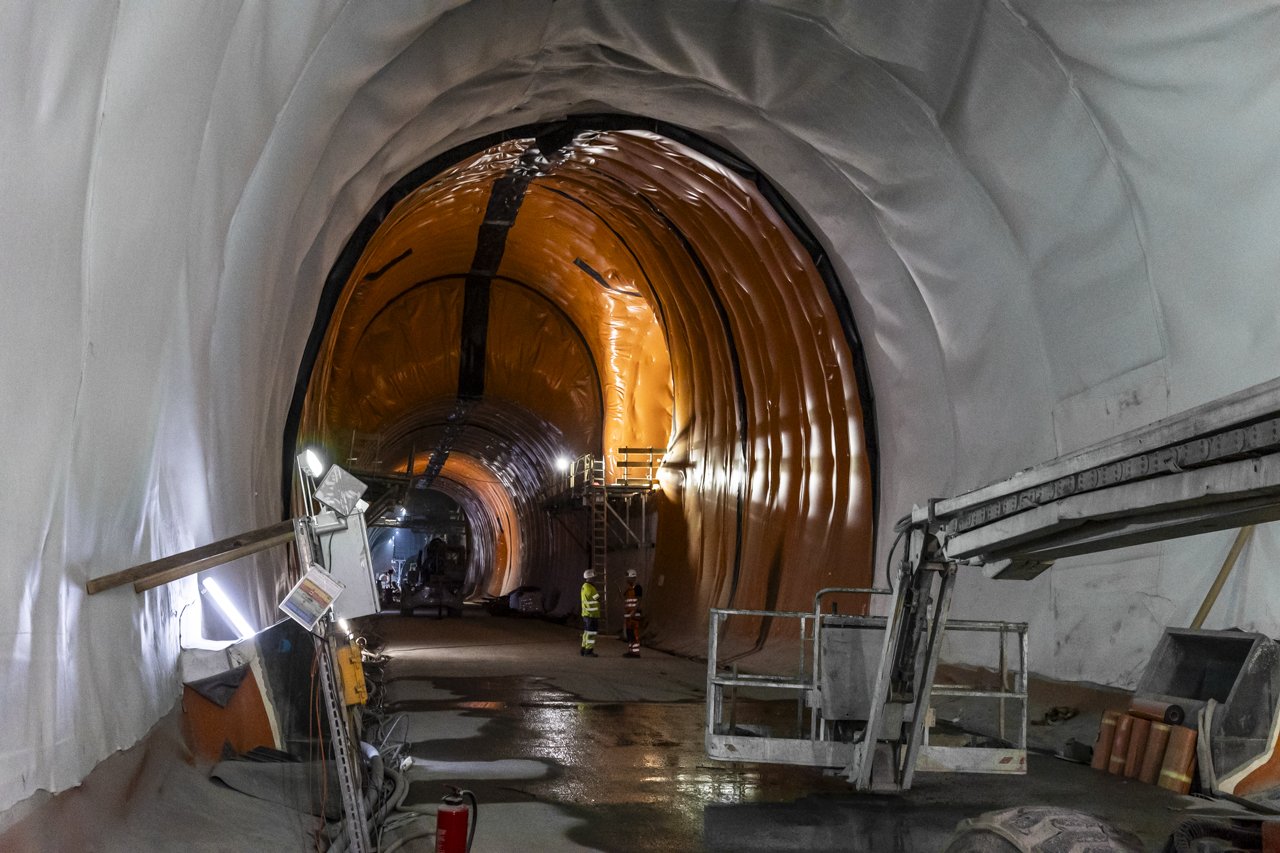
Both tunnelling methods were used in this construction lot: The main east and west tunnels northwards (Innsbruck) are being driven mechanically, i.e. by tunnel boring machines (TBMs), while the two main tunnels and the exploratory tunnel southwards, as well as the cross passages, are being constructed using mining methods, i.e. drill & blast.
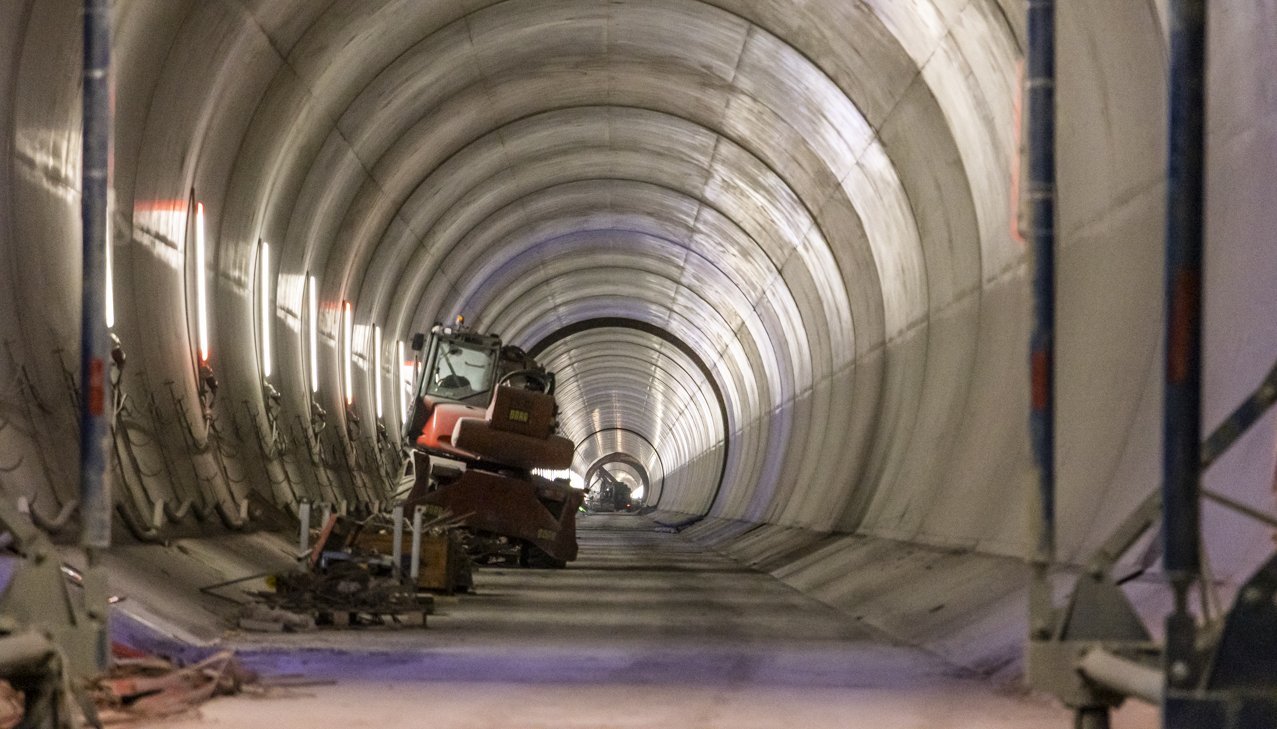
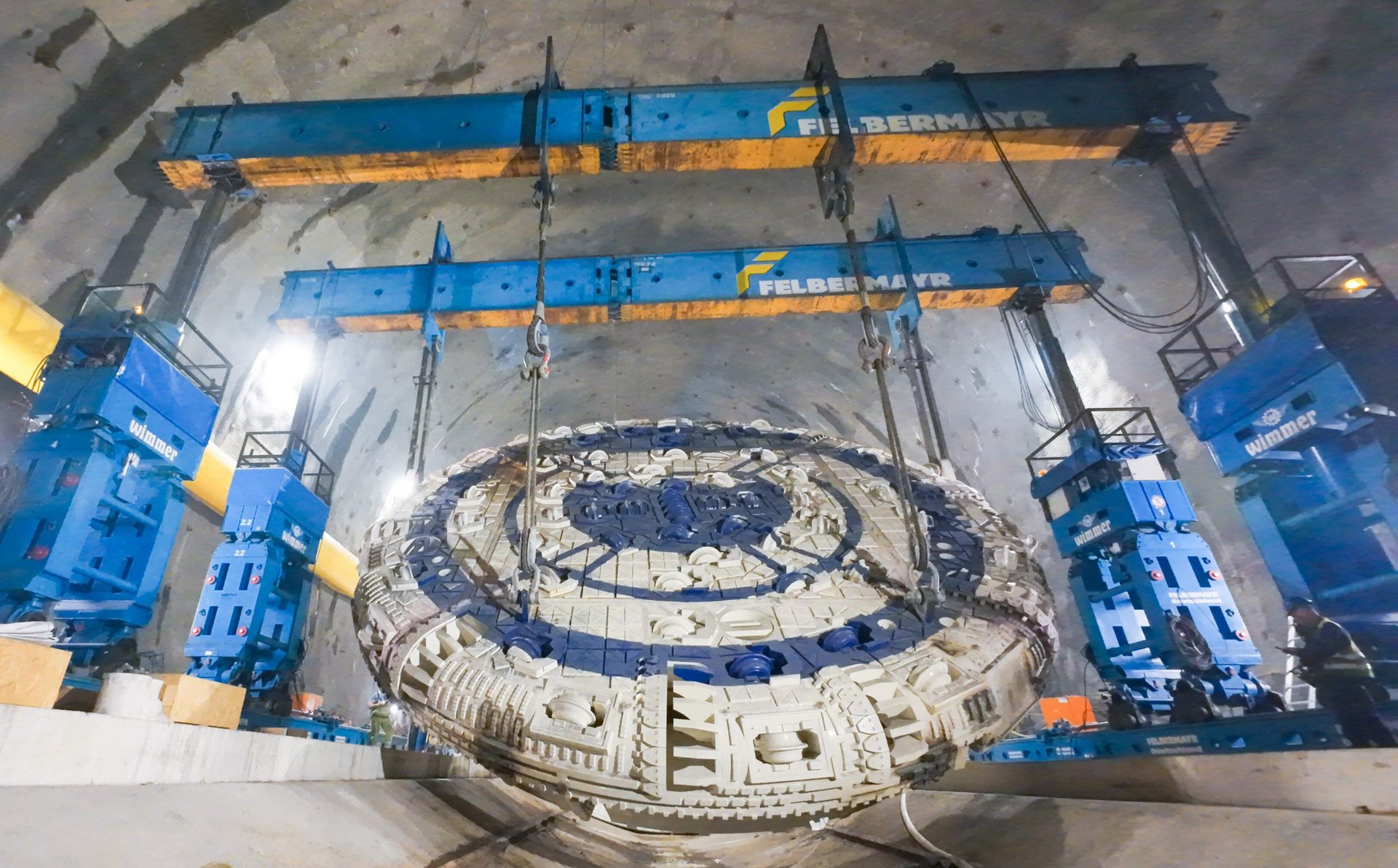
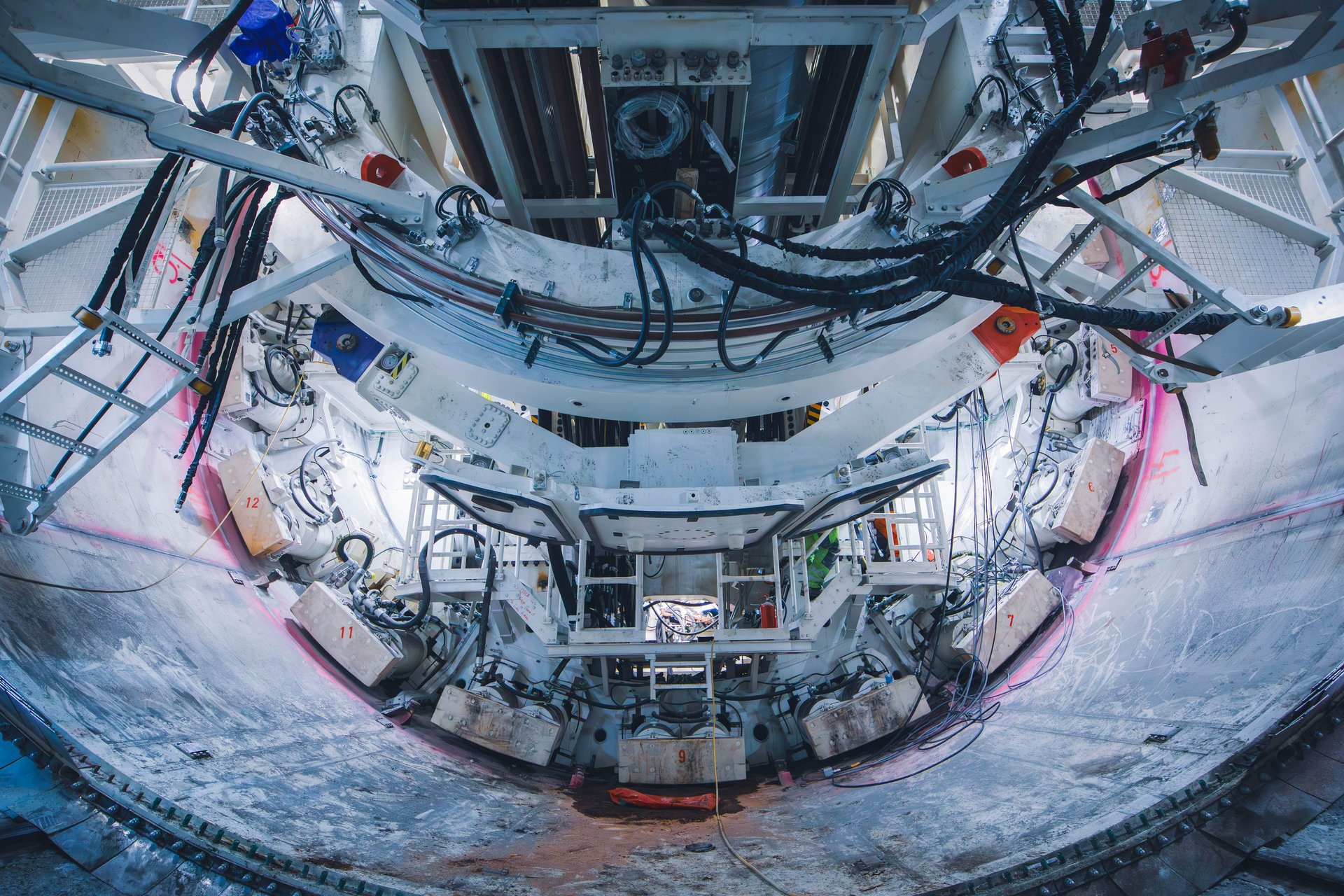
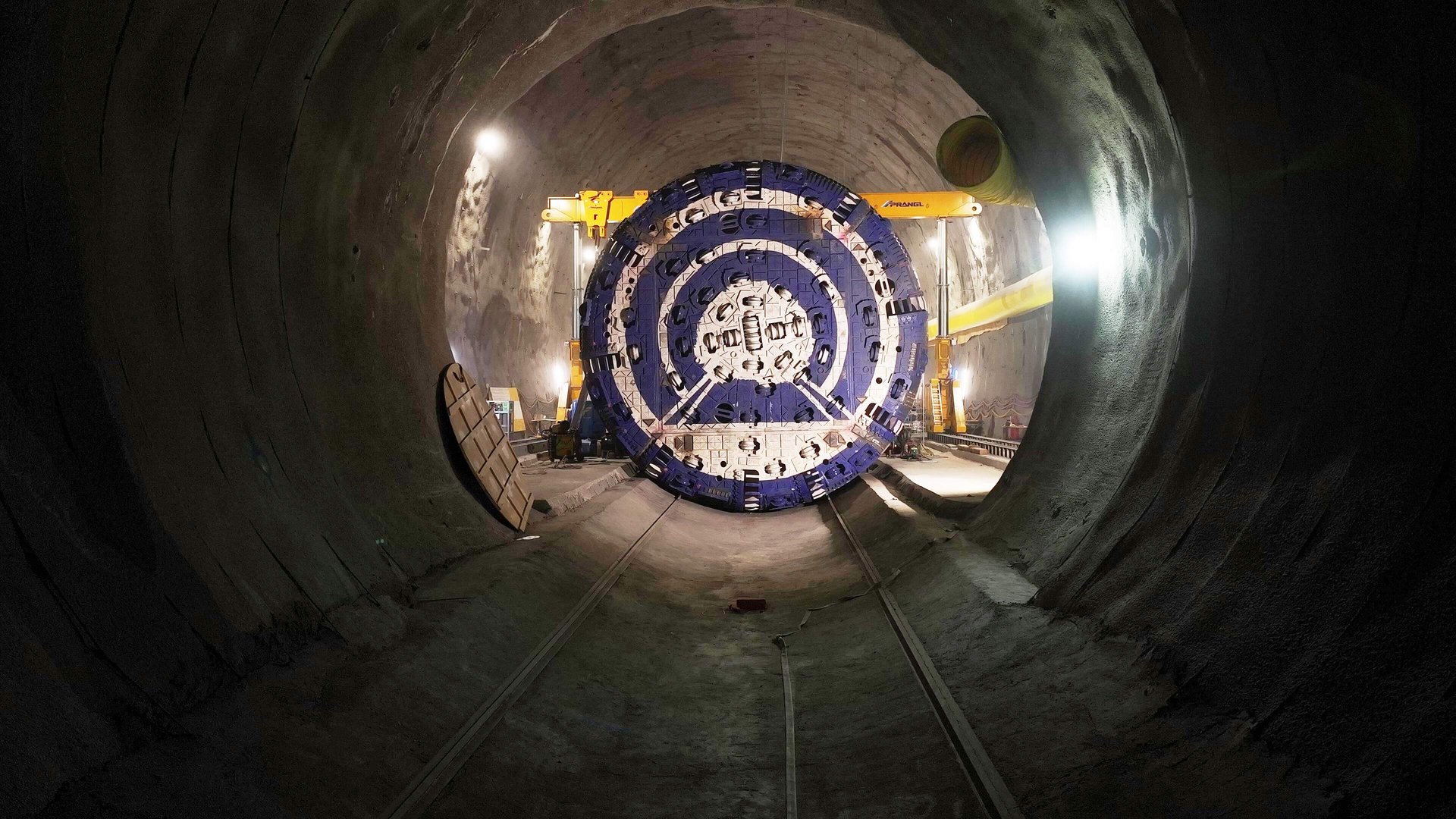
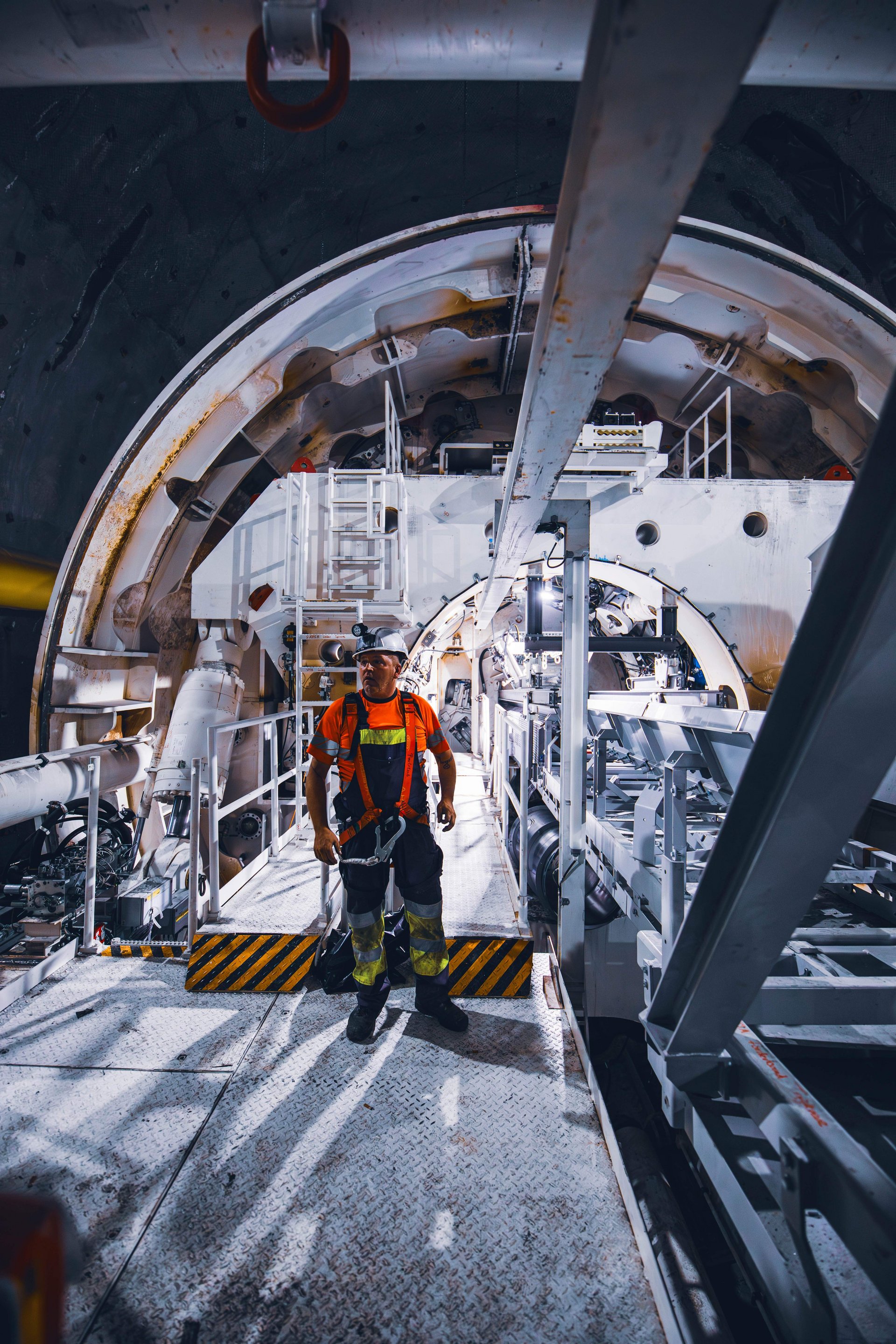
MECHANICAL EXCAVATION: After ordering, delivery and assembly, the two tunnel boring machines (TBMs) for this construction lot set off on their respective 7.6-kilometre-long tunnelling routes on 18 September 2024: ‘Wilma’ in the main west tunnel and ‘Olga’ in the main east tunnel. Together, they will drive approximately 15.2 kilometres of tunnel towards Innsbruck.
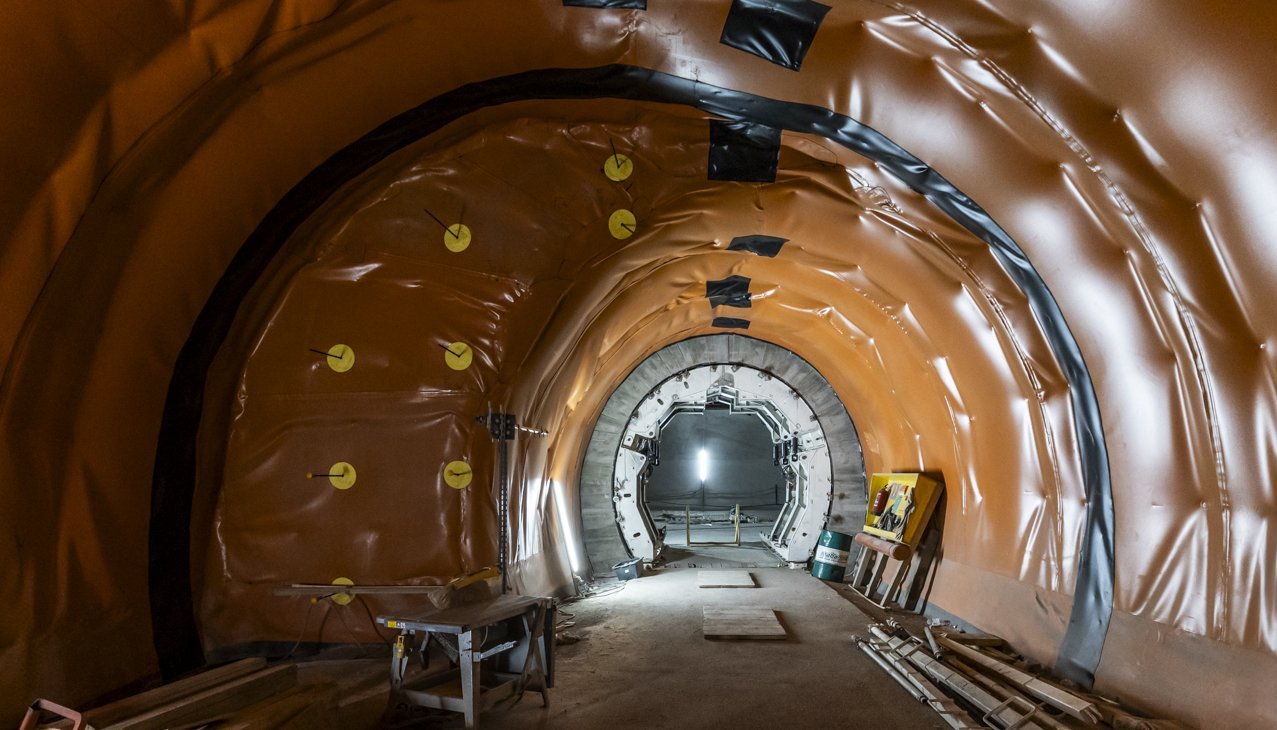
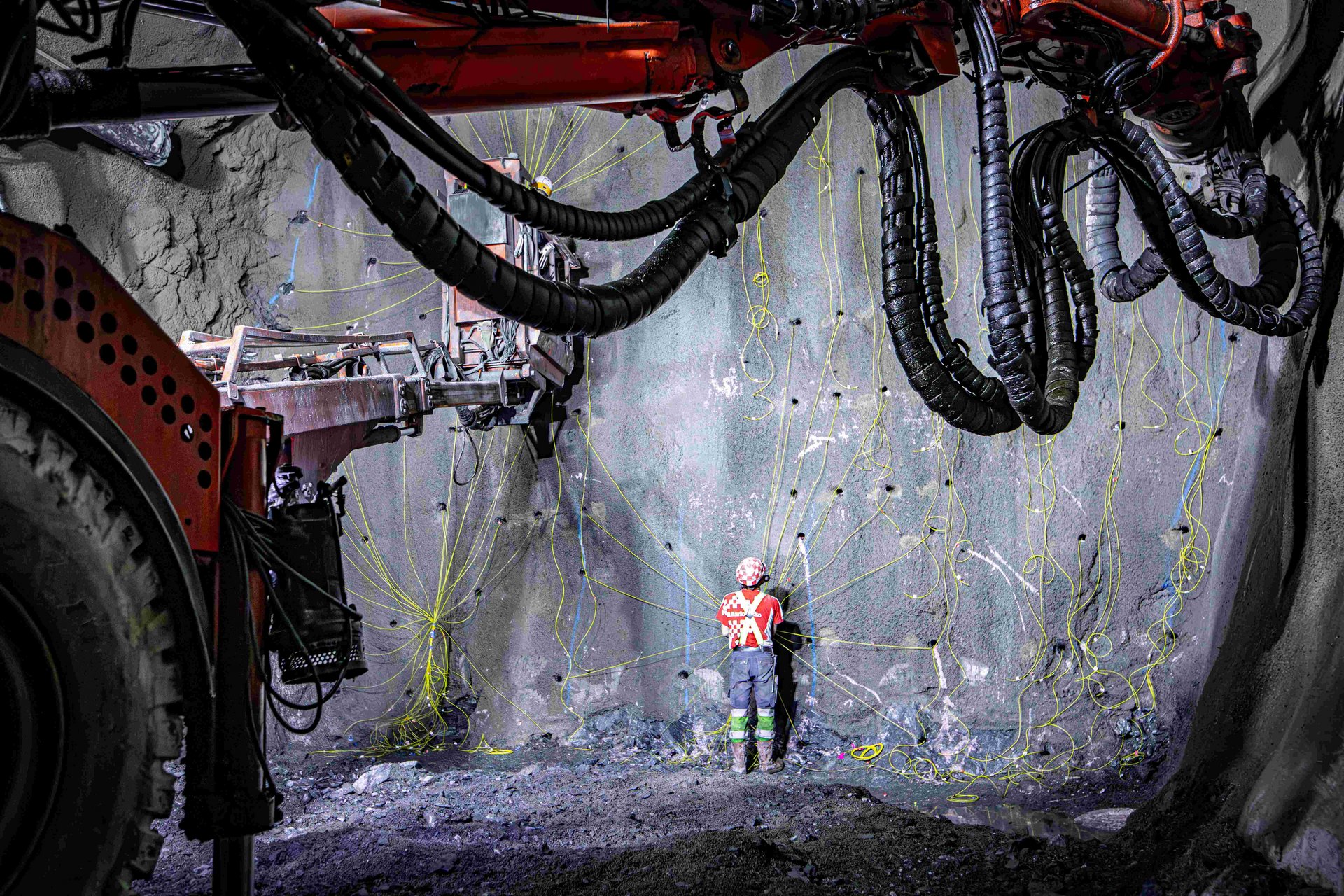
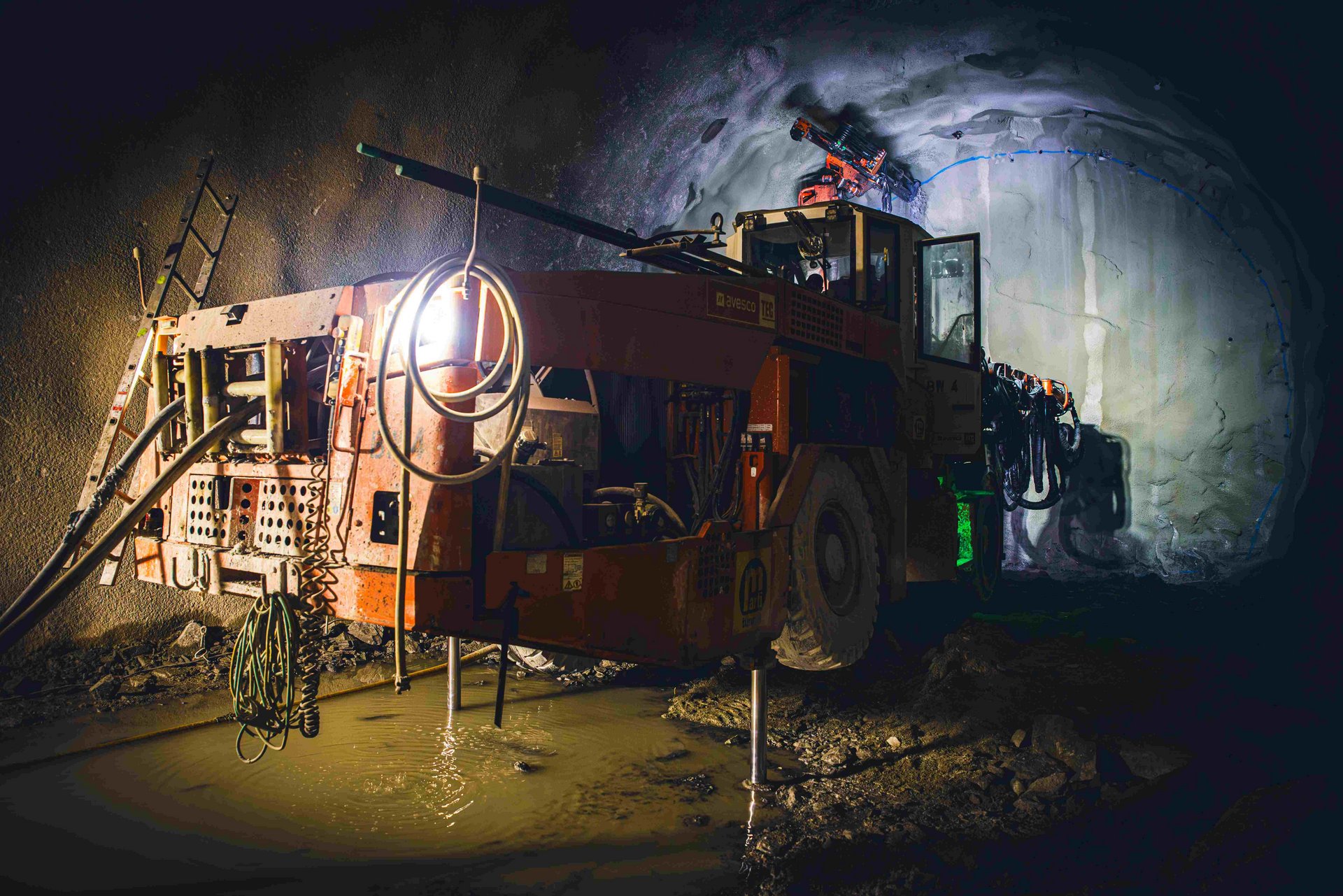
DRILL & BLAST: In March 2024, blasting excavation began southwards towards the national border at Brenner. The miners have a distance of around 5 km per main tunnel to cover, i.e. a total of 10 km. The 1.6 km section of the exploratory tunnel to the national border at Brenner was also excavated using mining techniques. The 37 cross-connecting passages, with a total length of approx. 2.6 km, will also be excavated by blasting.
SPECIAL FEATURES OF THE CONSTRUCTION LOT
Crossover point for diverting rail traffic during maintenance and servicing work
The crossover point consists of two connecting tunnels with a total of four switches. One connecting tunnel is 584 m long from switch tip to switch tip, with a curve radius of 1,200 m. As in the main tunnel tubes, the gradient is 6.7 ‰. The maximum admissible speed for trains in the connecting branch of the crossover point is 100 km/h.
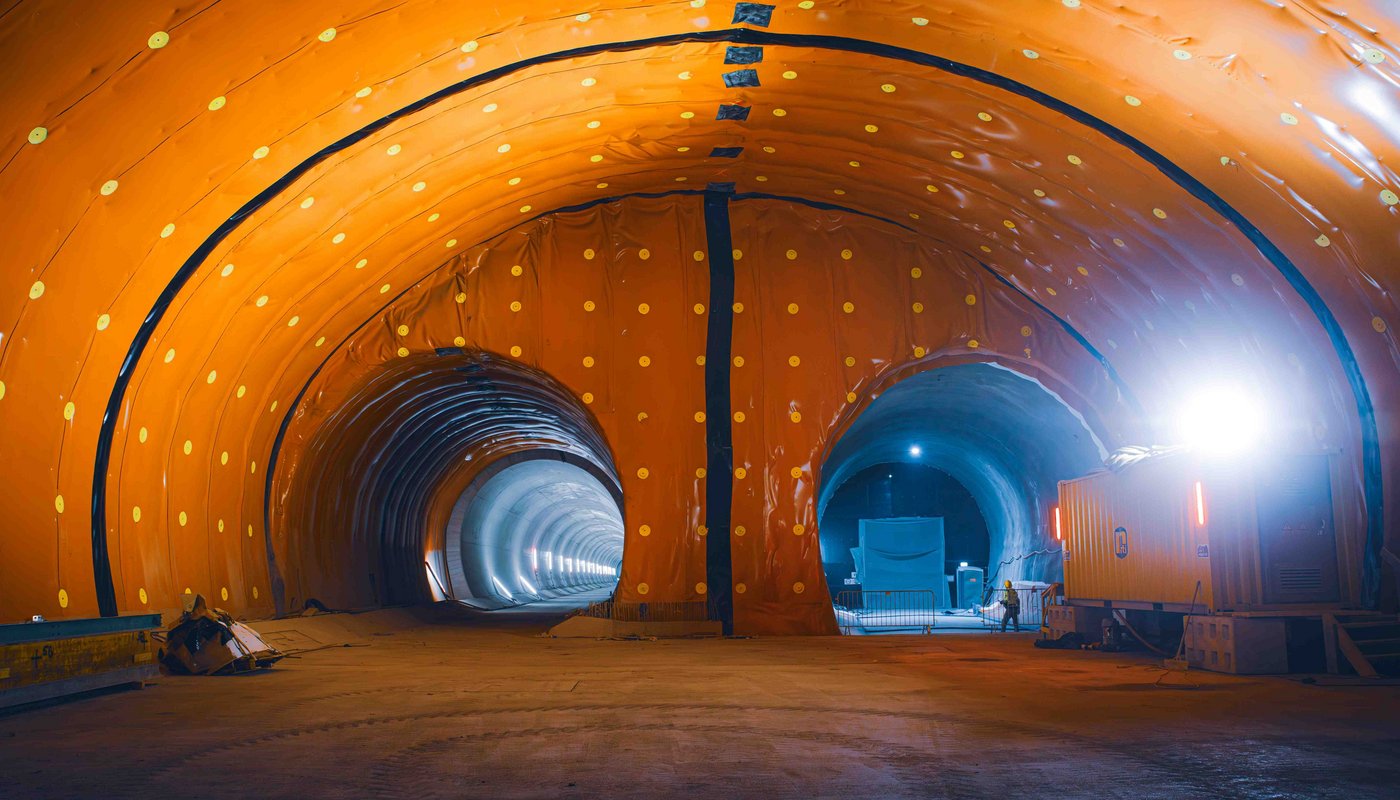
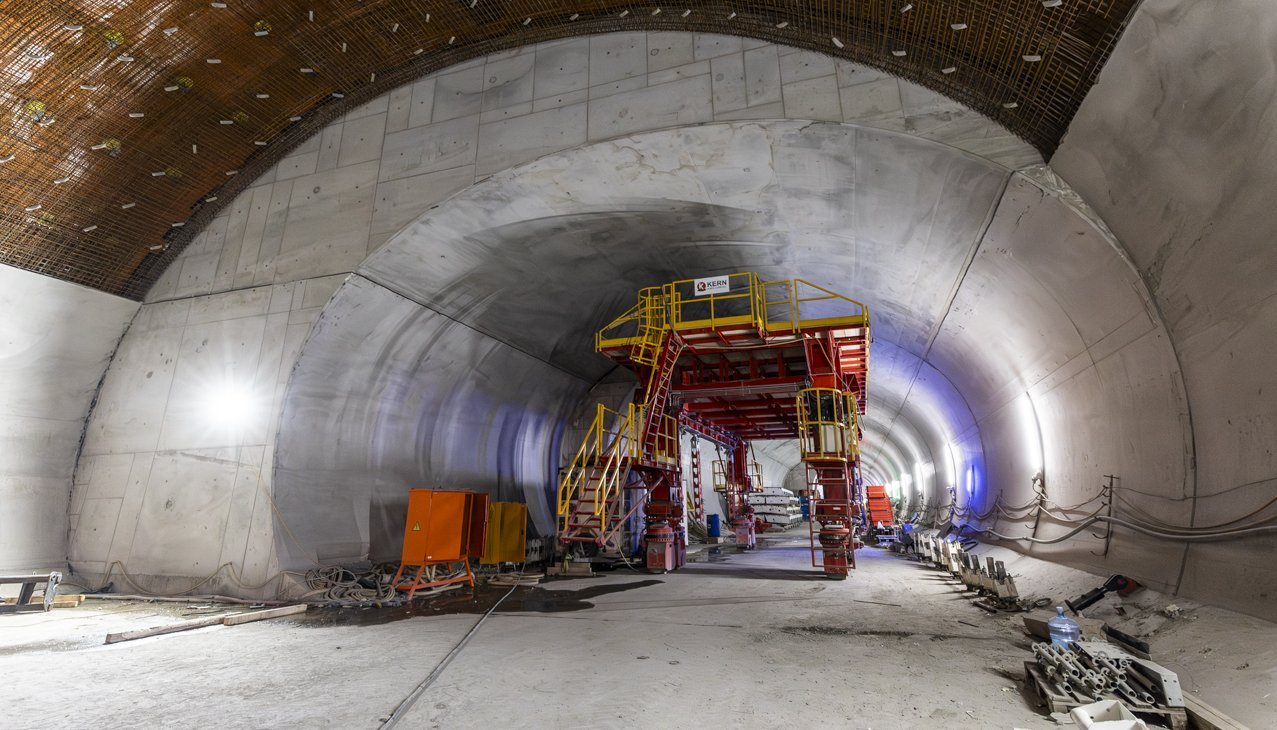
In the area of the switches, the main tunnel had to be widened so that the tracks were finally far enough apart that two individual tubes could be constructed. The 183.85 m long widening structures were widened in steps. The largest cross-section has a width of 22.7 m and a height of 14.70 m. There is a railway tunnel gate in the middle of each connecting tunnel of the crossover point.
Ventilation of the main tunnels is ensured during normal operations by the piston effect of the moving trains; there is no active tunnel ventilation.
However, the connecting tunnels would cause a short circuit, so to speak, in air circulation during normal operations. These tunnels must therefore be closed with tunnel gates.
Even in the event of an incident, the railway tunnel gates in the crossover point will remain closed to prevent a short circuit in the emergency ventilation system.
The main railway tunnel gates are only opened when one side of the BBT is closed for maintenance and servicing work, to allow trains to switch to the other main tunnel.